
Loading...
Serving Medical Lake, WA and surrounding areas. (509) 241-9765
Medical Lake Concrete & Masonry is a masonry contractor serving Spokane Valley, WA, specializing in driveway pavers, tuckpointing, and foundation repair for the valley's freeze-thaw climate. We have served Spokane-area homeowners since 2018, and we pull permits through the City of Spokane Valley's own building department.
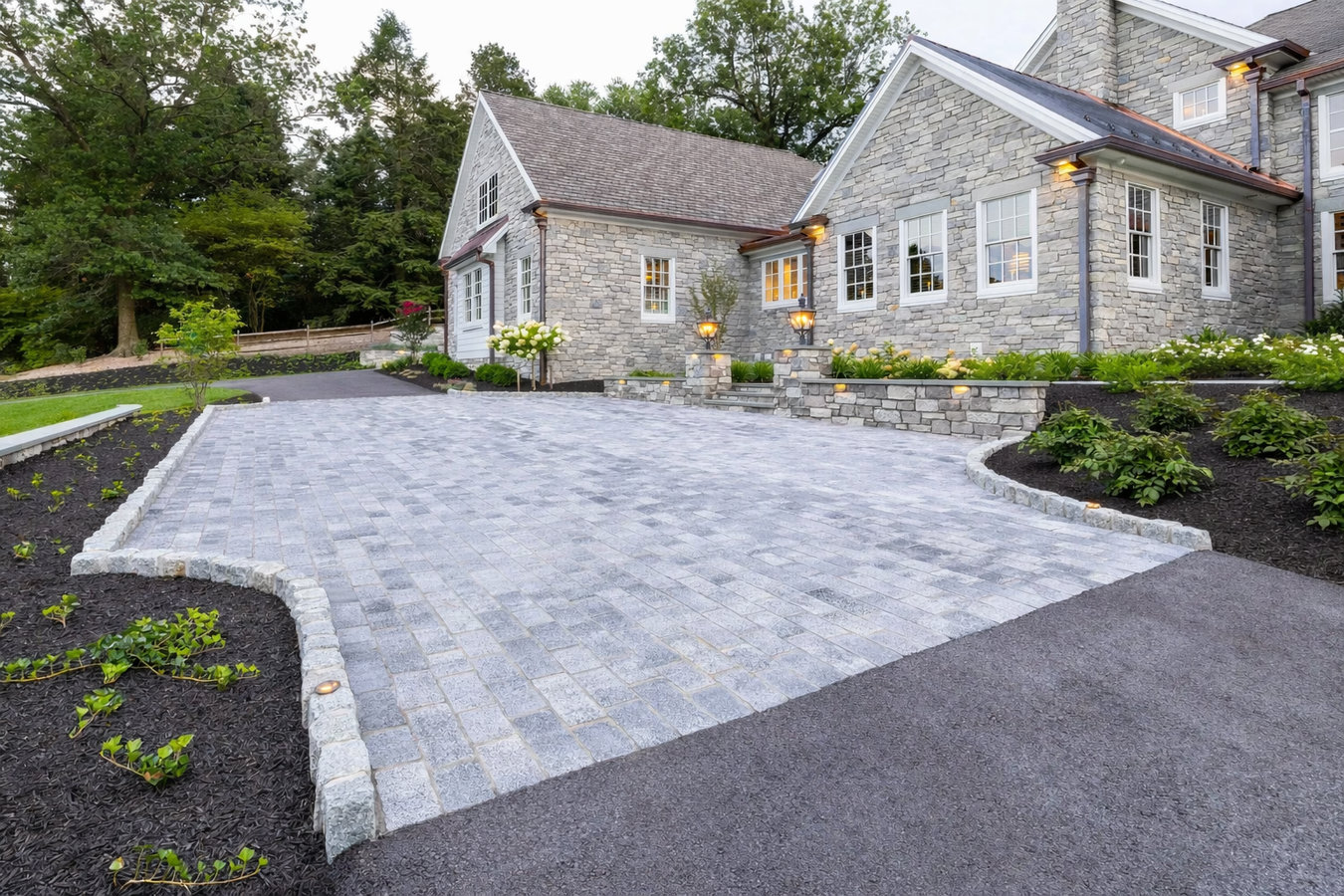
Spokane Valley averages around 45 inches of snow per year, and that repeated freeze-thaw cycle is the reason poured concrete driveways crack so reliably here every spring. Paver driveways flex slightly with the ground as it freezes and thaws, which is why they outlast poured slabs in this climate. Learn about our driveway paver installations.
Many Spokane Valley homes from the 1950s through 1980s have original brick chimneys and foundation walls with mortar that has never been replaced. Cold winters force water into aging mortar joints, and the freeze-thaw cycle widens those gaps every season until water is getting inside the home.
The glacial outwash soils common across much of the Spokane Valley floor drain well but can shift in low-lying areas near the river. Ranch homes on crawl spaces are the most common style here, and crawl space supports from the 1950s and 1960s are often the first thing to show age.
Post-war ranch homes all over Spokane Valley were built with brick chimneys that are now 50 to 70 years old. Cracked crowns, spalling brick, and failing flashing let water into the chimney structure and down into the firebox, and that damage does not stop on its own once the weather turns cold.
Properties on the edges of the Spokane Valley floor sometimes slope toward drainage channels, and a masonry retaining wall is the right long-term solution for holding soil and keeping grades stable through wet springs. Block and concrete construction handles the frost depth requirements for this region.
Spokane Valley homes with concrete walkways see the same freeze-thaw damage as driveways. Paver or brick walkways tolerate the ground movement better than poured slabs, and they can be re-leveled section by section if one area settles without tearing out the entire path.
Spokane Valley sits on the floor of a wide river valley underlaid by glacial outwash soils, a mix of sand, gravel, and silt left behind by ice-age floods. Most of the valley floor drains well, but low-lying spots near the Spokane River can hold water after heavy snowmelt or rain. Frost depth in the area reaches 12 to 18 inches, which means any masonry footing or concrete base that does not account for local frost depth will eventually heave. That is why the same driveway or walkway job requires a different base specification here than it would in a milder western Washington climate.
The housing stock adds to the demand. Most Spokane Valley homes were built between the 1950s and 1990s, and ranch-style construction dominates the neighborhoods between Sullivan Road and the eastern edge of the city. Homes from that era often have original concrete flatwork, aging brick chimneys, and crawl-space foundations that have been through 40 to 60 winters. The combination of older materials and a demanding climate means masonry issues tend to compound year over year rather than staying stable, and a contractor who knows the local soil and seasonal patterns can give you an honest read on what needs attention now versus what can wait.
Our crew works throughout Spokane Valley regularly, and we understand the local conditions that affect masonry contractor work here. One thing that comes up on nearly every job in this area is the permitting question: because Spokane Valley only became its own city in 2003, some homeowners and even some contractors are still confused about whether to go through the City of Spokane Valley, Spokane County, or the City of Spokane. The answer for work within city limits is the City of Spokane Valley's own Building Division, and we pull all permits through the right office.
The city stretches along major corridors including Sprague Avenue and Sullivan Road, and neighborhoods range from older established streets near the Spokane River to the Centennial Trail corridor to newer subdivisions out toward Greenacres. We work all of it. CenterPlace Regional Event Center and the Spokane Valley Mall are good landmarks for where the core of the city sits, and we cover homes from those central areas all the way out to the eastern city limits.
We also serve nearby communities. Homeowners in Opportunity and Millwood call us regularly for the same freeze-thaw repairs that Spokane Valley homes need, and we treat every project in this part of the county with the same attention to local soil and climate conditions.
Reach out by phone or through our contact form and we will respond within one business day. We will ask a few basic questions about your home, what you are seeing, and the general scope before scheduling a site visit.
We visit the property, look at the masonry, check drainage and soil conditions, and give you a written estimate that spells out labor, materials, and any permit costs. No price is locked in until you have seen it in writing and had a chance to ask questions.
For any job that requires a City of Spokane Valley permit, we handle the application before work begins. Most permits are issued within a few business days, and we schedule around the weather to make sure mortar or concrete work goes in at the right temperature.
We work to a clean finish and do a walkthrough with you before leaving. You will know exactly what was done, what the warranty covers, and what to watch for going forward. Permit inspection records are yours to keep.
We serve Spokane Valley homeowners with no-pressure written estimates. Call or fill out the form and we will respond within one business day.
(509) 241-9765Spokane Valley is one of the largest cities in Washington State, with a population of around 102,000 spread across roughly 38 square miles east of Spokane. It incorporated as its own city in 2003, separating from unincorporated Spokane County and establishing its own city government and building department. The Spokane River flows through the northern part of the city, and the Centennial Trail follows the river corridor through neighborhoods that back up to the water. Most of the city is made up of single-family neighborhoods on a flat valley floor, with ranch-style homes from the 1950s through 1980s making up the bulk of the housing stock. Newer subdivisions on the southern and eastern edges, including areas near Greenacres, have added two-story homes and larger square footage since the early 2000s.
About 60 percent of Spokane Valley homes are owner-occupied, and the city has a working- and middle-class character. Sprague Avenue runs east-west as a major commercial corridor, and the Spokane Valley Mall on Sullivan Road is a landmark that most residents know. If your home is in Veradale, which sits on Spokane Valley's southeastern edge, or in Liberty Laketo the east, we serve those communities as well and understand how the newer construction in those neighborhoods differs from the older core of the valley.
Build strong retaining walls that hold soil and prevent erosion.
Learn MoreTransform any surface with stunning natural or manufactured stone veneer.
Learn MoreConstruct solid, low-maintenance concrete block walls for any purpose.
Learn MoreBuild a reliable block wall foundation engineered for lasting support.
Learn MoreCreate the perfect outdoor cooking space with custom masonry craftsmanship.
Learn MoreAdd character and structure with professionally installed brick walls.
Learn MoreCall us now or submit a request online. We respond within one business day and provide written estimates at no charge for Spokane Valley homeowners.